Licensed Daycares in Washington, DC
Browse 200 DECAL-licensed daycares in Washington, Georgia. Filter by age, CAPS acceptance, and ratings. Free parent resource.
200 listings found








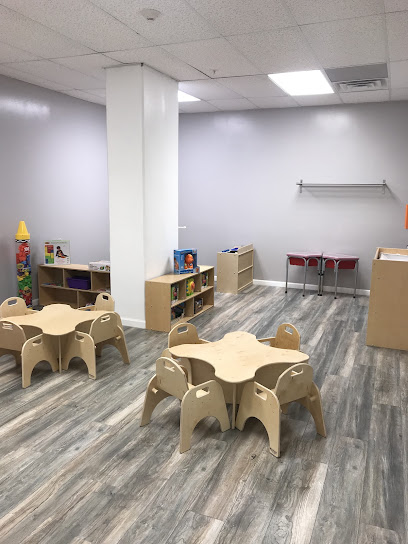



Daycare & Childcare in Washington
439
Licensed centers
4.5★
Avg Google rating
154
Rated 4.5+
Washington, D.C. is one of the most education-conscious cities in America, and that civic priority shows up clearly in its childcare landscape. With 439 licensed daycares operating across the District, families here have more options on paper than in nearly any comparable American city — but navigating those options requires understanding a market that is simultaneously abundant and, in certain dimensions, surprisingly constrained. The sheer number of licensed providers reflects D.C.'s dense population and its long-standing investment in early childhood infrastructure, yet some of the data points that matter most to working families reveal real gaps beneath that headline number. Perhaps the most striking figure in the D.C. childcare market is the subsidy acceptance rate: zero percent of the city's licensed providers in this dataset accept the Child Care Subsidy Program. For the tens of thousands of D.C. families who qualify for subsidy assistance based on income, this means that finding a licensed, subsidy-accepting center requires outreach beyond what a standard directory search will surface. It does not mean subsidy is unavailable in D.C. — the city's Child Care Subsidy Program is administered through the Office of the State Superintendent of Education — but it does mean families should contact OSSE directly to obtain a current and verified list of participating centers rather than assuming directory coverage reflects the full subsidy landscape. On infant care, the picture is considerably more encouraging. A full 327 of D.C.'s 439 licensed providers — 74 percent — serve infants under 12 months, which reflects a genuine commitment to care for the city's youngest children. This is meaningful for new parents navigating one of the most stressful childcare searches there is. Drop-in care, however, is another story: not a single D.C. provider in this dataset offers drop-in services, which has real implications for parents who rely on occasional or backup care arrangements. Quality certification benchmarks are also worth noting. No D.C. providers in this dataset hold QIRS certification or NAEYC accreditation, though the city's licensing and inspection regime through OSSE remains the foundational quality assurance mechanism. Google ratings across the five named providers average a strong 4.48 stars — matching the statewide average precisely, which places D.C. in solid company. What makes this market truly distinctive is the combination of high provider volume, strong infant coverage, and the absolute necessity of direct institutional engagement to unlock subsidy support.
What to know about childcare in Washington
Among Washington's 439 licensed daycares, five providers have accumulated enough verified Google reviews to give families a reliable quality signal, and each serves a meaningfully different slice of the market. Kennedy Child Development Center leads in review volume with an impressive 264 reviews and a 4.5-star rating, making it one of the most community-vetted programs in the entire city. Kennedy also serves infants under 12 months, which adds to its appeal for families planning ahead during pregnancy or early parental leave. Its review depth suggests a long-established presence and the kind of institutional trust that accumulates over years of consistent programming.
Martha's Table Maycroft Early Learning Center earns 4.4 stars across 114 reviews and stands out for its mission-driven roots — Martha's Table is a respected D.C. nonprofit with deep ties to the city's most under-resourced communities, and its early learning center reflects that ethos of access and care. Families drawn to programs with strong community equity values will find Maycroft particularly resonant.
Bright Start Brentwood and Bright Start Childcare and Preschool each hold an exceptional 4.9-star rating across 99 reviews, the highest scores among named D.C. providers. Both locations serve infants, which is especially significant given how competitive infant slots are in this market. Their near-perfect ratings across a substantial review base signal operational consistency that parents can meaningfully rely on.
Washington Hebrew Congregation rounds out the named providers with a 4.6-star rating across 99 reviews. As a faith-affiliated program, it offers families who value a values-centered early childhood environment a highly regarded option. It is worth noting that beyond these five named providers, CloverMap's dataset indicates 154 providers across the city hold ratings of 4 stars or higher — this figure draws from a broader aggregated dataset that extends beyond the five individually named and verified profiles, and families should consult individual listings for full detail.
For families making childcare decisions in Washington, D.C., the practical realities of this market demand more than a quick directory search — they require strategic planning, early action, and direct engagement with the institutions that govern childcare access in the city. Starting with the subsidy question: the Child Care Subsidy Program, administered by the Office of the State Superintendent of Education, exists to help income-qualifying D.C. families afford licensed care. However, this dataset shows zero percent of the 439 licensed providers accepting subsidy through the program as reflected in directory listings. What this means in practice is not that subsidy is unavailable — the program itself is active and funded — but that the gap between subsidy authorization and provider participation is real and documented. Families who have been approved for CCSP assistance should contact OSSE directly at osse.dc.gov to request an up-to-date list of currently participating licensed centers. Do not assume that a provider's CloverMap listing reflects subsidy acceptance status; call each center individually and ask specifically whether they are enrolled with OSSE's subsidy payment system. This extra step is not optional if cost support is essential to your childcare plan.
On infant care, D.C. families are working in a market where 327 of 439 licensed providers — 74 percent — do serve children under 12 months, which is genuinely encouraging. But high coverage does not mean easy access. Infant slots in D.C. are among the most competitive in the region, and waitlists at popular centers routinely extend six to twelve months or longer. Families expecting a child should begin researching and submitting applications during the first trimester if at all possible. When contacting a center, ask not just whether they have openings, but specifically how long their current infant waitlist is, what their enrollment deposit terms are, and whether they notify families on rolling basis or only at a fixed annual point. Centers like Bright Start Brentwood and Bright Start Childcare and Preschool, which serve infants and carry near-perfect ratings, are likely to have particularly high demand, so early outreach is essential.
The complete absence of drop-in care among D.C.'s licensed providers is a practical constraint that parents should plan around proactively. With zero centers offering drop-in services in this dataset, families cannot rely on the D.C. licensed daycare ecosystem for occasional or emergency backup care. This means building a separate backup care infrastructure — whether through a trusted family member, an au pair arrangement, a nanny share with neighbors, or a corporate backup care benefit through an employer — is not a luxury but a necessity. Parents returning to work should establish backup options before their child begins a primary care arrangement, not after. Employer-sponsored backup care programs through providers like Bright Horizons or Care.com Business are available to many D.C.-area employers and can fill the gap that licensed drop-in centers would otherwise serve.
Inspection and licensing compliance is managed in D.C. by OSSE — the Office of the State Superintendent of Education — which conducts both scheduled and unannounced inspections of licensed facilities. Parents can access inspection records through OSSE's online portal, and doing so before enrolling a child is one of the highest-value due-diligence steps available. When reviewing an inspection report, look specifically at whether any Class A violations — which represent the most serious regulatory breaches — appear in the most recent two inspection cycles. A center with a strong Google rating but recent licensing violations warrants a direct conversation with the director before you commit. Similarly, no D.C. providers in this dataset hold QIRS certification or NAEYC accreditation, so parents should not expect to filter by those markers here. Instead, lean on OSSE inspection history, Google review depth and recency, and personal tours as your primary quality signals. When touring, ask to see the infant-to-caregiver ratio in action during a busy morning drop-off period — licensing minimums and actual daily practice are not always the same thing, and observing a real morning will tell you more than any brochure.
Browse Washington by program type
Parents also ask
How does the Child Care Subsidy Program work in Washington, D.C., and why can't I find providers that accept it in the directory?
How early should I start looking for infant daycare in Washington, D.C.?
Are there any drop-in daycare centers in Washington, D.C.?
How do I check whether a D.C. daycare has passed its most recent inspections?
Are any Washington, D.C. daycares NAEYC accredited or QIRS certified?
Tips for choosing childcare in Washington
Verify Licensing
Always confirm that a daycare holds a valid state license. Licensed centers meet health, safety, and staffing requirements.
Read Parent Reviews
Reviews from other parents give real insight into daily routines, staff quality, and how facilities are maintained.
Ask About Curriculum
Whether play-based, Montessori, or STEM-focused — the right curriculum can have a lasting impact on your child's development.
Consider Schedule Fit
Make sure operating hours, program types, and flexibility match your family's daily schedule and work commitments.
Frequently Asked Questions
How many licensed daycares are in Washington, DC?
CloverMap lists 200 DECAL-licensed daycare providers in Washington, Georgia. All listings have been verified against the Georgia DECAL licensing database.
Do daycares in Washington accept the CAPS subsidy?
Yes, many DECAL-licensed daycares in Washington accept Georgia's CAPS childcare subsidy, which can reduce your childcare cost significantly depending on your income. Use CloverMap's CAPS filter to find accepting providers in Washington.
What is the average daycare cost in Washington, DC?
Daycare costs in Washington typically range from $700–$2,200/month depending on the child's age and care type. Infant care is the most expensive ($1,100–$2,200/month), while preschool-age care averages $700–$1,400/month. NAEYC-accredited centers run about 20% higher than average.
What should I look for when choosing a daycare in Washington?
Look for DECAL licensure (required in Georgia), staff-to-child ratios, curriculum type (Montessori, play-based, faith-based), age group coverage, CAPS acceptance, and parent reviews. CloverMap lets you filter by all of these criteria for daycares in Washington.
Get spot opening alerts
We'll email you the moment a spot opens — no phone number needed.
Get the bi-weekly family digest
New daycares, events, CAPS updates, and guides — delivered free every two weeks.